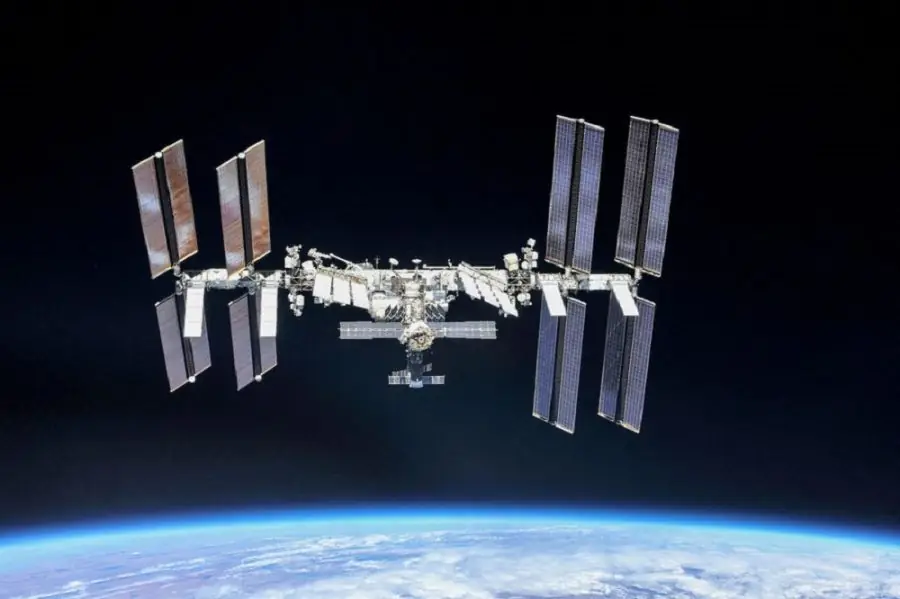
Russia has announced that after 2024, it will depart from the International Space Station and launch its own brand-new space station. Given how the ongoing crisis in Ukraine is changing geopolitics, the decision is not entirely unexpected. For years, the Russian space program has been toying with the idea of ending the alliance. The judgment is nevertheless a serious setback for global space cooperation.
In an interview with Russia 24, a state-run Russian news channel, Borisov clarified that they do not intend to do this in 2024 but after 2024, which are two completely different things. The interview was posted to the Roscosmos website in Russian, and Borisov outlined the underlying strategy Roscosmos is taking toward its International Space Station (ISS) departure plans and clarified the agency’s intent to carry on according to international agreements. “The procedure for the withdrawal of the Russian side from the international ISS project is clearly regulated,” Borisov explained.
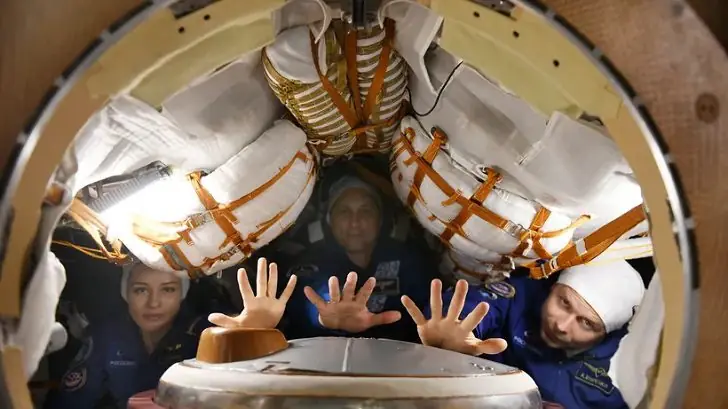
The announcement was made after President Vladimir Putin and Yuri Borisov, the new head of Russia’s space agency, discussed it during a meeting on Tuesday. The Biden administration had intended to fund the ISS’s operations until at least 2030; however, Russia had not officially promised to continue supporting the station until the year 2024. Now, without the assistance of its old partner, the United States must decide how to run the station.
There’s no need to panic quite yet
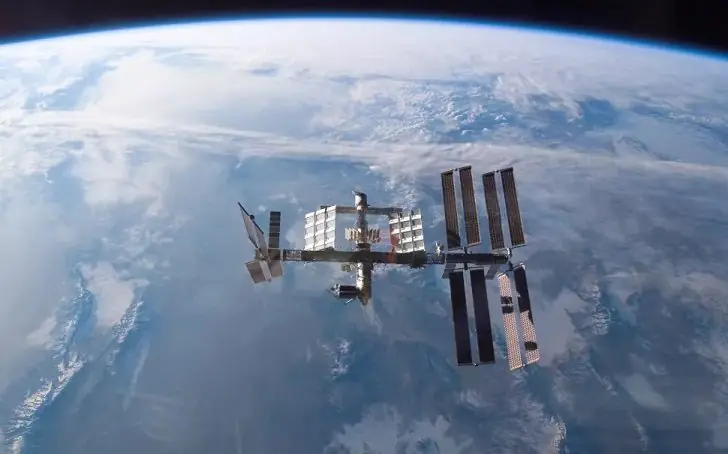
The U.S. and Russia, along with other partners, have successfully worked together on the ISS since 1998. But relations have soured since Russia invaded Ukraine, and Russia previously threatened to quit the project because of Western sanctions against it. The ISS, a joint project, spanning the size of a football field and orbiting some 250 miles above Earth, has been continuously occupied for more than two decades under a U.S.-Russian-led partnership that also includes Canada, Japan, and 11 European countries, has been in orbit around Earth since 1998 and has been used to conduct thousands of scientific experiments. It is approved to operate until 2024, but the US wants to extend that for six more years with the agreement of all partners. Former ISS commander and retired US astronaut Dr. Leroy Chiao believes Russia will unlikely decide to leave the project.
However, Rogozin was known for making outlandish threats, and Borisov is a relatively new player at Roscosmos, so it was unclear how seriously his statement should be taken. Roscosmos later published an interview with Vladimir Solovyov, the flight director of the Russian portion of the ISS, who gave more details on the plans for ROSS in a Twitter thread.
He noted that ROSS will be built in two phases, with the first one beginning in 2028 and that he believed it was necessary to continue operating the Russian portion of the ISS until that time so there wouldn’t be a gap in crewed missions to orbit. Rogozin had also said there would need to be an overlap between the ISS and the new Russian space station.
More details of the Russian Orbital Service Station (ROSS)
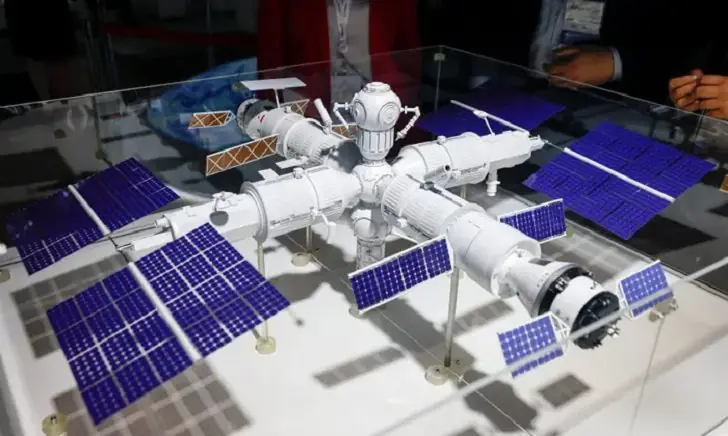
The first phase would see a four-module space station start operating. That would later be followed by a further two modules and a service platform, it said. That would be enough, when completed, to accommodate up to four cosmonauts and scientific equipment. Roskosmos has said the new station would afford Russian cosmonauts a much wider view of the Earth for monitoring purposes than they enjoy in their current segment.
Although designs for some of the new stations already exist, design work is still underway on other segments. Russian state media has suggested that the first stage launch be planned for 2025-26 and no later than 2030. The launch of the second and final stage is scheduled for 2030-35, they have reported.