Xi Jinping’s foreign policy has had a profound effect on South East Asia – a lot more than any other country’s foreign policy. As Beijing’s power is growing, Washington’s is getting increasingly uneasy too. After years of ignorance, the U.S. is trying to become involved with the region again.
Change In China’s Strategy
The U.S. has decided to attend the annual summit of the Association of South East Asian Nations, also known as the ASEAN. This makes President Joe Biden the first U.S. leader to make this trip since 2017. He is scheduled to meet the Chinese leader Xi Jinping before attending the G20 meeting. The U.S. is acting in a more diplomatic way than it has done in the past.
ASEAN is seen as crucial to establishing diplomatic relations between countries. It’s also fashioned itself as a platform to establish peace and unity between countries. ASEAN has ten member states, but its weak and small secretariat lacks any decision-enforcing power over its members.
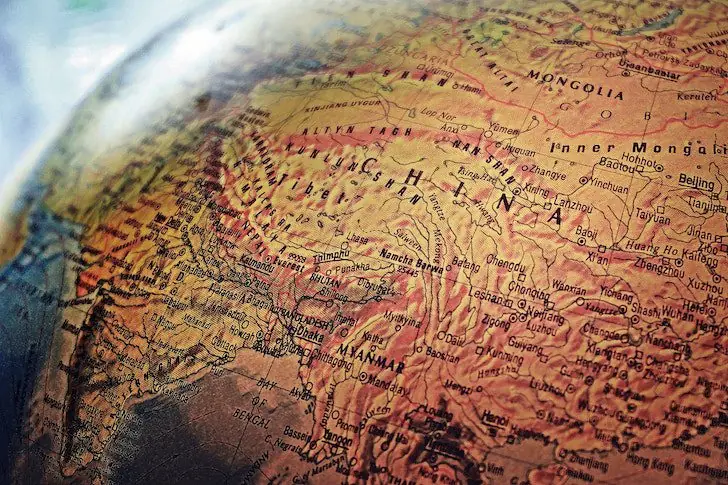
China has embarked on a charm on the region following Mr. Xi’s strategy. Previously, China’s military development and occupation of reef islands in the South China Sea have raised a conflict with the Philippines and Vietnam. ASEAN has made several attempts to get China to agree to a solution have all been in vain.
Beijing has dismissed an international court ruling and showed ignorance towards problems caused by its damming of the Mekong River. Countries that are involved in ASEAN are in a weak position as they cannot dare confront China, which has a powerful military and is important economically as well.
Vietnam, which was at war with China 43 years ago and has high anti-China sentiment, is cautious when it comes to dealing with its neighboring country, China. This is because China is Vietnam’s major trading partner that fuels its exports.
China destroyed Asean unity as it picked off smaller states which are now so dependent on Beijing that you might just consider their client states. Another truth is that South East Asian countries are also not that impressed with Washington. They see it as an unreliable partner who made the region accept unpopular and tough economic measures after 1997.
The U.S. focus on the Quad alliance with Japan, Australia, and India has weakened ASEAN and left it stuck between two powerful nations. Washington’s efforts to challenge China frightened the ASEAN countries because they would lose a lot from the superpower confrontation.

The U.S. administration has never made efforts to pursue free trade agreements, which has made ASEAN countries the most trade-dependent regions in the world. A relationship with China has also led to a trading bloc that links China, Japan, Australia, South Korea, and New Zealand. Even Indonesia, which has the most china-skeptic foreign policy, sought investment, technology, and loans under President Joko Widodo.