Once upon a time, Darwin’s Arch, found in the Galapagos, stood as one of the most beautiful sights in the world. Sadly, the beloved rock formation has crashed into the sea…
Darwin’s Arch Sudden Crash
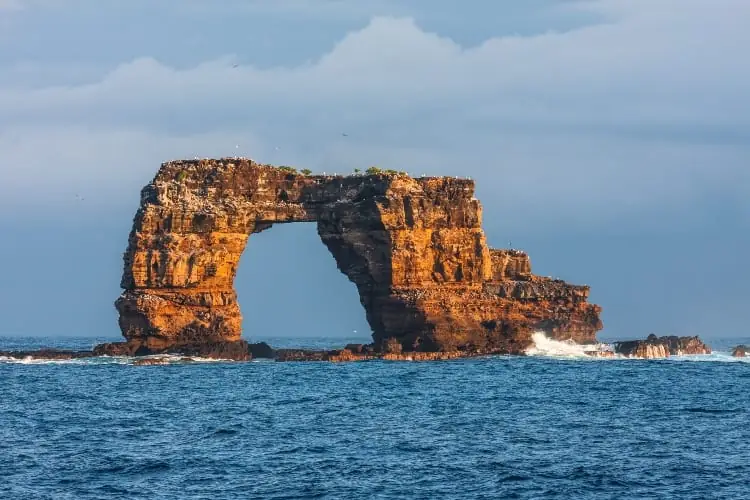
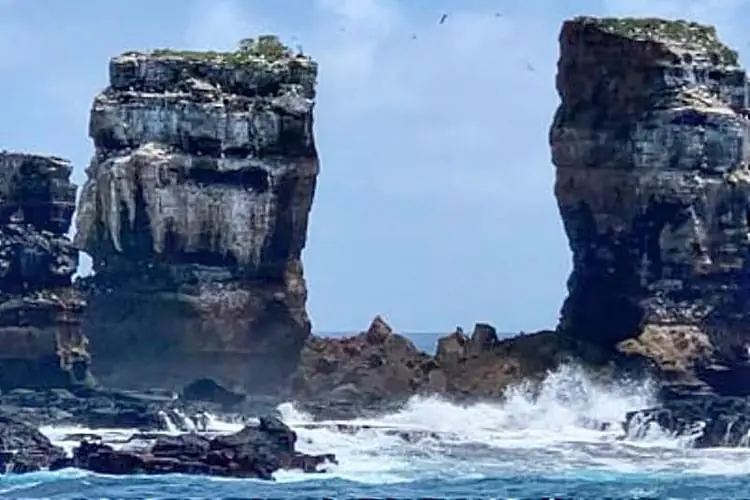
Unfortunately, the time has come for Darwin’s Arch. This unique rock formation finally lost the battle to natural erosion. As you can see in the image above, the top of the Arch no longer exists; it recently fell into the ocean. It earned its name from English biologist Charles Darwin, who counted it as one of his favorite locations in the Galapagos. In fact, it was on the island nearest to the Arch, Darwin’s Island, that the biologist developed his theory of evolution.
The Ministry of Environment for Ecuador confirmed the loss of one of the Galapagos Islands’ most iconic sites. “The collapse of Darwin’s Arch, the attractive natural bridge found less than a kilometer from the main area of Darwin Island, collapsed,” it wrote in a statement. “Darwin’s Arch is made of natural stone that at one time would have been part of Darwin Island, which is not open to visits by land.”
Surprisingly, the Ministry of Environment had to hear about the collapse from tourists, no less. Although Darwin Island has been closed to visitors, they are allowed to drive around the island in a boat. Tour company Aggressor Adventures became the first to reveal the news on Facebook. After all, one of its groups saw the collapse in real-time! “Unfortunately today, our guests of the Galapagos Aggressor III experienced a once in a lifetime event,” the company said. “This morning at 11:20 a.m. local time, the world famous Darwin’s Arch collapsed in front of their eyes.”
Home To Many Animals
For those who have never been to the Galapagos Islands, the erosion of the Arch just shows the incredible danger – and beauty – the islands have. For instance, Darwin Island has been closed to visitors for some time. And while it might look like you want to swim near the Arch, it is probably better you stay out. The Galapagos Conservancy says that the waters are still “home to an extraordinarily high density of multiple species of sharks and other reef and pelagic fish that change on a seasonal basis.” Other local animals include sea turtles, manta rays, and dolphins.
Whale sharks also visited the Arch quite often. Pregnant whale sharks didn’t leave or eat here, but Darwin Island gave them something else. It became “an important stopover in a migration, possibly with reproductive purposes.” This exciting news shocked the research team! Don’t worry if you never saw the Arch – it will remain a vacation destination. “Some in the dive & travel industry are already referring to this now as ‘The Pillars of Evolution’. We will miss this iconic site,” Aggressor Adventures added.
Sources: CNN, Live Science