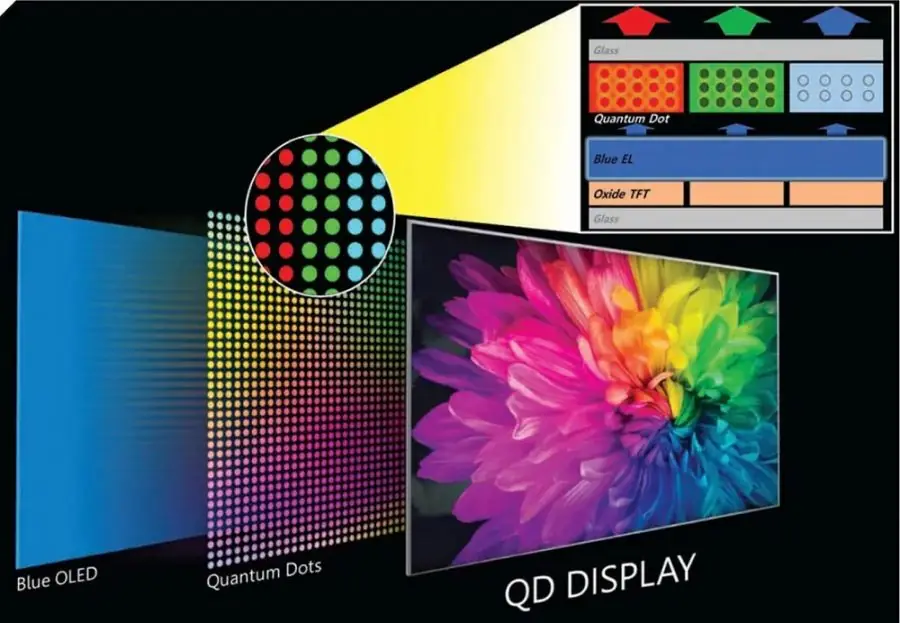
Quantum dot technology is a rapidly developing field that holds tremendous promise in various applications ranging from medical imaging and displays to solar cells and lighting. Quantum dots are tiny semiconducting crystals that are just a few nanometers in size, making them incredibly small.
They are known for their unique electronic and optical properties that are different from other materials. These properties make quantum dots ideal for various applications, including:
Medical Imaging
Quantum dots have proven useful in medical imaging as they emit light at specific wavelengths, making them ideal for fluorescent imaging. They can be used in targeted drug delivery, where they can be attached to drugs and directed to specific cells in the body.
Quantum dots can also be used as contrast agents in magnetic resonance imaging (MRI) and computed tomography (CT) scans, enhancing the visibility of internal organs and tissues.
Displays
Quantum dot technology manufactures displays such as televisions, monitors, and laptops. They offer a broader range of colors and higher brightness levels than traditional liquid crystal displays (LCDs). Quantum dot displays are also more energy-efficient and can produce brighter images using less power. This makes them ideal for use in portable devices like smartphones and tablets.
Solar Cells
Quantum dot solar cells are a type of photovoltaic cell that uses quantum dots to increase energy conversion efficiency from sunlight. Quantum dots can capture a broader range of the solar spectrum than traditional solar cells, which makes them more efficient.
They can also be engineered to absorb specific wavelengths of light, making them more efficient at converting solar energy into electricity. Quantum dot solar cells can revolutionize the solar energy industry, making it possible to generate more electricity from the same amount of sunlight.

Lighting
Quantum dot technology is also being used to produce high-quality lighting. Quantum dot LEDs (QLEDs) are an emerging technology that offers improved color accuracy, brightness, and energy efficiency.
They use a layer of quantum dots to convert blue LED light into a broad range of colors, producing a more natural and visually appealing light than traditional LEDs. Quantum dot lighting is also more energy-efficient, making it a promising technology for homes and commercial buildings.
Quantum Computing
Quantum computing is an emerging technology that promises to revolutionize computing by using the principles of quantum mechanics to perform calculations. Quantum dots are a critical component of quantum computers, serving as the building blocks for qubits.
Qubits are the basic units of quantum information and are essential for performing quantum calculations. Quantum dots are also used to generate entangled photon pairs, which are crucial for quantum communication and cryptography.
Chemical and Biological Sensing
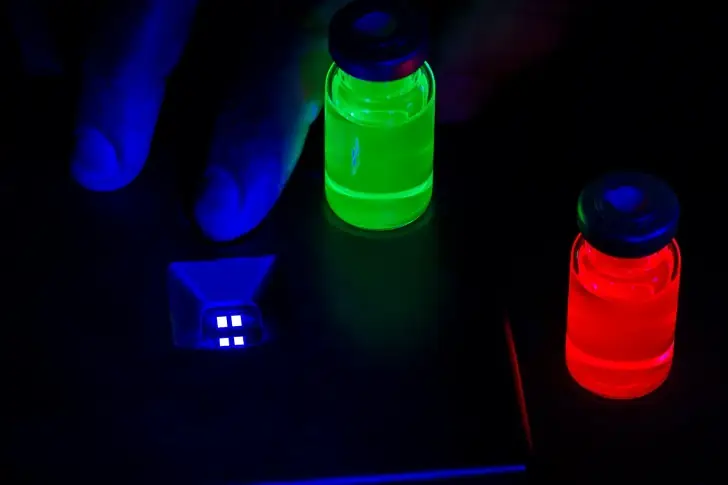
Quantum dots have unique optical properties that make them useful for chemical and biological sensing. They can detect the presence of specific chemicals or biological molecules by binding to them and emitting light.
Quantum dots can be engineered to emit light at particular wavelengths, making them ideal for sensing applications. They are also highly sensitive, making detecting small concentrations of target molecules possible.